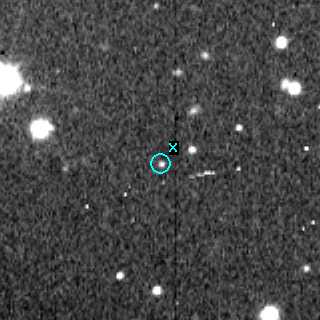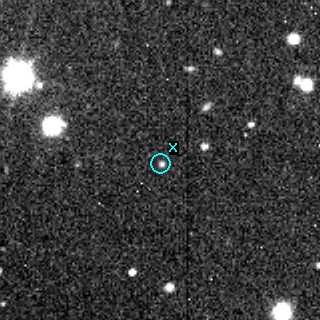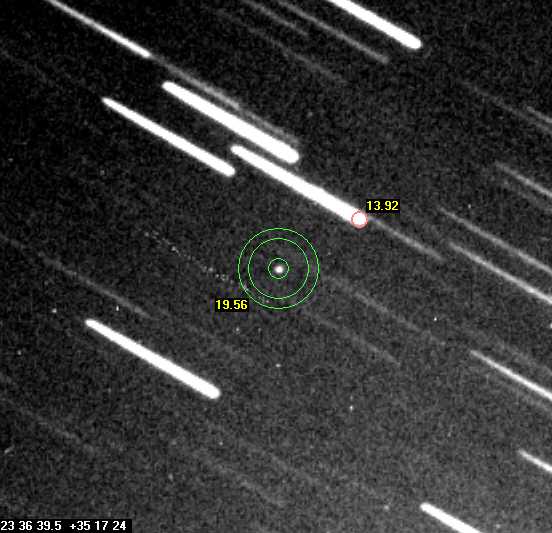
Recovery of 2005 WE67 on September 7: the magnitude 19.6 asteroid (circled) holds still while the stack is aligned on its motion, so the field stars trail past it.
2005 WE67
Faint Asteroid Recovery
A survey to recover faint, nearly lost asteroids from Silver Spring Observatory, September 2005 to February 2006: every target frame, night by night, with the checks behind each reported position.
Asteroids that are only observed for a short time can have calculated orbits with large uncertainties, and may be in danger of being lost. Recovering and re-observing them refines their orbits. Some have not been seen for years; others were measured, even many times by the surveys, but never identified.
Every unidentified object adds to the computer time needed to match new measurements. Securing an orbit lets those stray measurements be assigned, makes sure the asteroid is never lost, and usually means it can be numbered at the next opposition.
This survey started at Silver Spring Observatory in September 2005: targeted searches for faint objects (magnitude 19 to 20 and beyond) with large uncertainties, using dedicated software by J. C. Pelle that gives high confidence in identifying the recovered object. It also turned up new objects in the same fields as the targets, including the discoveries 2005 TT15 and 2005 VL2.
Recovery of 2005 WE67 on September 7: the magnitude 19.6 asteroid (circled) holds still while the stack is aligned on its motion, so the field stars trail past it.
Faint Asteroid Recovery
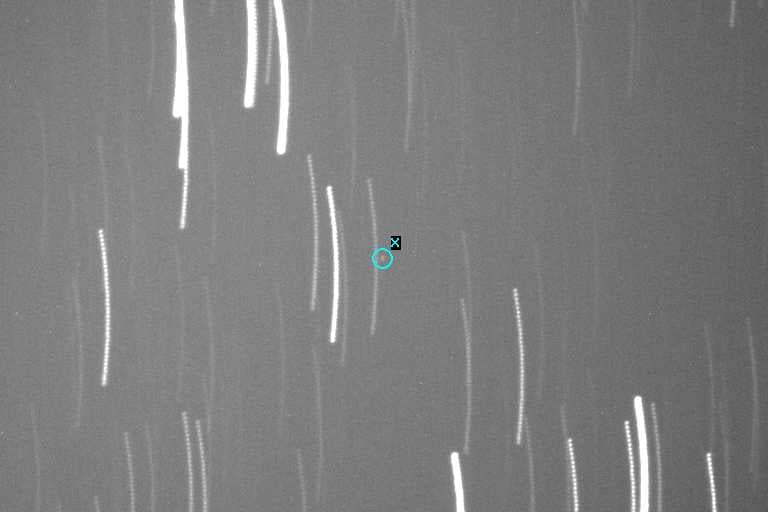
Frames stacked on the predicted motion of the asteroid: the target (circled) builds up to a point while the stars smear into trails.
Tracking a Faint Asteroid
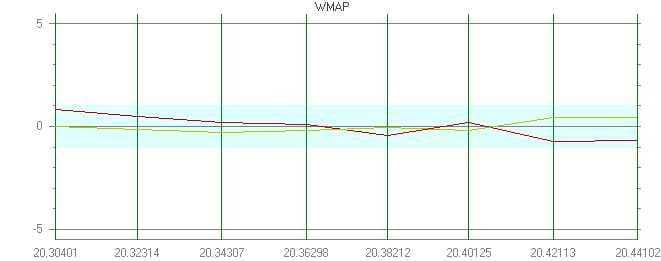
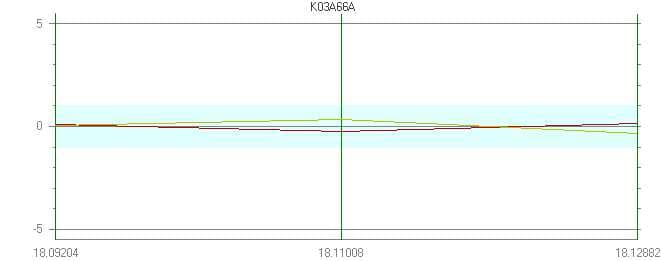
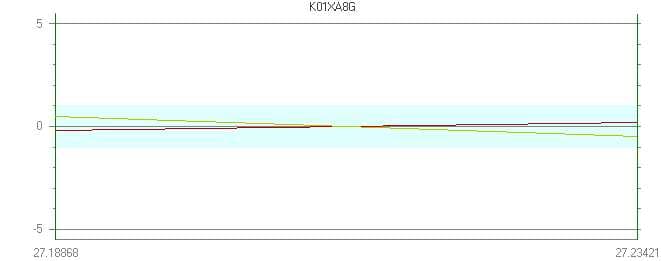
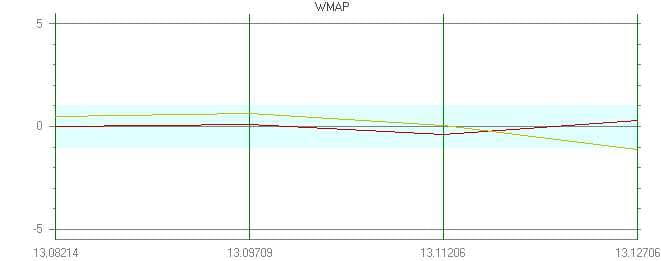
Before reporting, each set of positions was checked against the predicted orbit. The lines show how far the measurements fall from the orbit over the night; staying inside the shaded band means a good fit.